
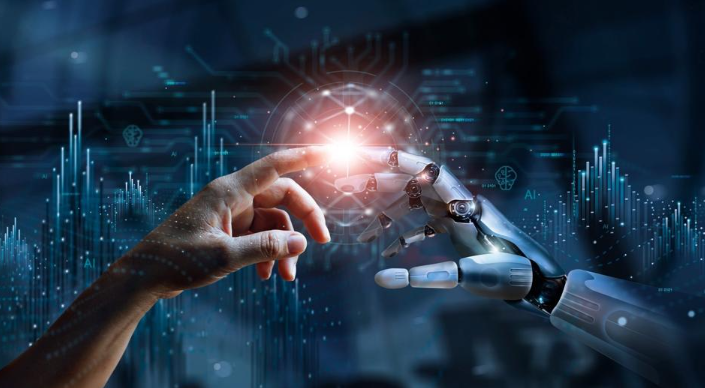
The discourse surrounding artificial intelligence is often clouded by prevalent myths. Many individuals contend that AI will completely replace human jobs, while others believe it can emulate human emotions. Additionally, the assumption that AI is infallible misrepresents its capabilities. Such misconceptions can lead to misguided expectations and hinder effective collaboration. Understanding the true nature of AI is crucial. What are the implications of these myths for society and technology?
AI Will Replace Human Jobs Completely
Although concerns about job displacement due to artificial intelligence (AI) are widespread, the assertion that AI will completely replace human jobs is an oversimplification.
The automation impact fosters job evolution rather than outright elimination. Many roles will transform, requiring new skills and adaptability.
Consequently, this dynamic landscape empowers individuals to embrace opportunities generated by AI, reinforcing the need for continuous learning and flexibility in the workforce.
AI Can Think and Feel Like Humans
How can one reconcile the perception that artificial intelligence (AI) possesses human-like thoughts and emotions?
While AI exhibits advanced cognitive processing capabilities, it lacks true emotional intelligence.
AI algorithms can simulate responses based on data patterns but do not experience feelings or consciousness.
This distinction underscores the limitations of AI, revealing that its operational framework differs fundamentally from the nuanced emotional landscape of human beings.
AI Is Infallible and Always Accurate
The belief that AI is infallible and always accurate is a widespread misconception that stems from its sophisticated data processing capabilities.
In reality, AI systems are susceptible to data limitations and algorithm biases, which can lead to inaccuracies and flawed outcomes.
Understanding these vulnerabilities is crucial for users who seek to harness AI’s potential while remaining aware of its inherent limitations.
See also: Technical Dataset: 18442017176, 18442432303, 18443295283, 18444060551
AI Operates Independently Without Human Oversight
While many people perceive artificial intelligence as a self-sufficient entity capable of functioning independently, this notion overlooks the critical role of human oversight in AI operations.
Machine learning algorithms require continuous human collaboration to refine their effectiveness and address biases.
Without this essential guidance, AI systems can lead to unintended consequences, underscoring that human involvement remains indispensable in ensuring ethical and accurate outcomes.
Conclusion
In conclusion, the myths surrounding artificial intelligence can lead to misguided perceptions about its role in society. For instance, a recent study revealed that 85% of jobs that will exist in 2030 have yet to be invented, highlighting the dynamic nature of the workforce in relation to AI. Rather than fearing job displacement, embracing AI as a collaborative tool can enhance human potential, ensuring that technology complements rather than replaces human effort. Continuous education is vital to navigate this evolving landscape.

